














































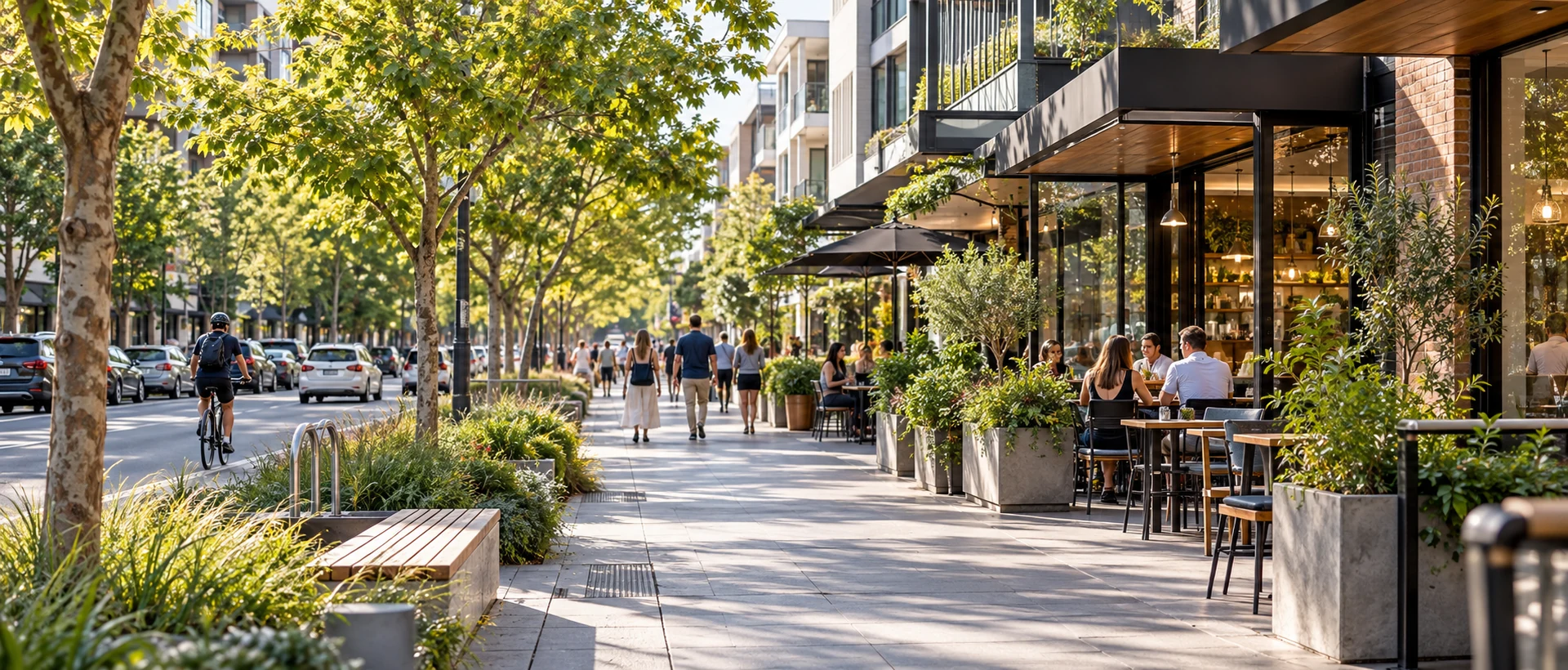
Braddon sits beside Canberra’s city centre and is a good neighbourhood for exploring local life on foot. Cafés, small shops, restaurants and residential streets are spread across different blocks. The area may look close to Civic, but the route still depends on entrances, crossings and how long you plan to stop. If you want to combine coffee, shopping and a look at the city, choose a walking area first, then decide where to rest and turn back. This is easier to adjust than following a shop list from one end to the other.
Before you start, open the CityTimeDate Canberra page to confirm the city’s location and local time, then plan around opening hours and your group’s pace. This article does not recommend a particular shop or promise a certain walking experience based on a fixed distance. It offers a neighbourhood-exploration method you can use throughout the year.
Plan from the edge between Civic and Braddon
Many visitors walk from Civic toward Braddon, but the boundary between the two areas is not a single fixed entrance. Confirm your accommodation, public-transport stop and first place to visit, then choose which street to use. If you treat a map label as the starting point, you may turn at an unfamiliar corner and spend extra time finding your way.
For a first visit, divide the outing into three parts: “arrive in the neighbourhood,” “main walk,” and “return or continue to the next stop.” After arriving, take a few minutes to check your direction before going into a café or shop. Leave time to check the next transport leg before you leave. This reduces delays from looking for a stop, entrance or place to wait outside.
If people in your group walk at different speeds, agree on an easy-to-recognize meeting point in advance. Shops can change, so choose a public street, a visible intersection or a transport stop rather than naming a small shop. These preparations do not limit the outing; they make it easier for people to explore separately and meet again.
Set a pace for cafés, shops and breaks
Braddon’s cafés and small shops work well as separate stops, rather than a checklist where every place is mandatory. Choose one main stop and leave time for an unplanned walk around the neighbourhood to notice shopfronts, shade, seating and foot traffic. If there is a queue at the first café, you can use another option within the same walking area.
Opening hours, seating, payment methods and what is available that day can change. Check the shop’s latest notices before leaving and prepare an alternative that does not depend on one business. Do not treat a menu or opening time in an old online article as a guarantee for today, and do not assume from a shop name alone that its entrance suits a stroller or large luggage.
Adjust breaks to the needs of your group. With children or older adults, take a short walk after a café stop, then look for a seat or shaded area. If you are alone, keep shopping bags and water somewhere easy to manage. The goal is to leave room to adapt, not to visit as many shops as possible.
Use streets and entrances to manage your walking area
Braddon’s streets may look orderly, but walking can still involve intersections, driveways, construction, slopes and different pavement surfaces. Mark the starting point, planned stops and return direction on a map, then decide whether to extend the walk based on the day’s foot traffic and weather. Do not treat the straight-line distance between two shops as the actual route.
If you arrive by public transport, confirm which side of the street your stop is on and whether you must cross a major intersection to reach the first destination. When leaving the neighbourhood, check the return direction again; stops or traffic flows may differ on opposite sides of the same road. An offline map or a note of street names can help if your phone signal is unreliable.
If you want to take photos or look at the buildings, plan a main-street option and a side-street option. Main streets make it easier to find shops and return to transport. Side streets may be quieter, but first check lighting, entrances and the distance back. You do not need to walk every street; choose an area where you can turn back early if daylight or energy changes.
Alternatives for rain, heat and luggage
Comfort on a Braddon walk can be affected by wind, rain, clouds, heat and pavement conditions. Check the Bureau of Meteorology’s Canberra forecast before setting out; do not decide based only on sunshine or how the weather felt the previous day. If the forecast is unsettled, shorten the outdoor section and place cafés, shopping and the return to your accommodation near easy access points.
Large luggage makes a neighbourhood walk less convenient. On arrival day, leave your bags at the accommodation or a storage location before exploring if possible. If you cannot, check shop entrances, pavement width and places where you can pause briefly. In rain, allow time to put away an umbrella, reorganize belongings and wait for transport instead of scheduling back-to-back shop visits.
Keep two backup options: a shorter route within the same area, and a switch to an indoor stop or a direct return to your accommodation. The first keeps some of the city experience; the second avoids pushing through uncomfortable conditions. Confirm with each business whether you can enter with belongings or use its seating.
Connect a Braddon walk with the rest of your day
You can combine Braddon with shopping in Civic, a lakeside walk or a visit to national institutions on the same day, but check the direction and connections for each leg first. If you visit an institution in the morning and walk around the neighbourhood in the afternoon, consider the return trip and the light around sunset. If you plan dinner in Braddon, confirm how you will get back and what walking distance your group is comfortable with.
Use the latest information from Transport Canberra for public-transport routes and service status. When travelling from one neighbourhood to the next, do not apply another Australian city’s transit-card rules or assume the return journey is just the morning route in reverse. Before leaving, reconfirm stops, direction and the last walking section to reduce the chance of a detour.
Your itinerary can list a starting point, flexible stop time, backup meeting place and return-to-accommodation option for each leg. Use the CityTimeDate date and time tool to organize travel dates, then check official notices for changes on the day. When each section has an option to end early, a Braddon walk can fit naturally around the rest of your plans.
Further reading and sources
Event dates, opening hours, and transport services may change. Check official updates before you travel.