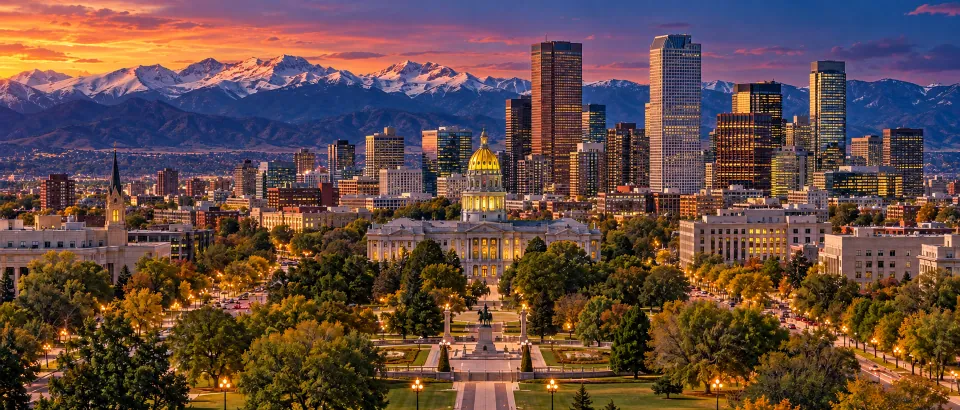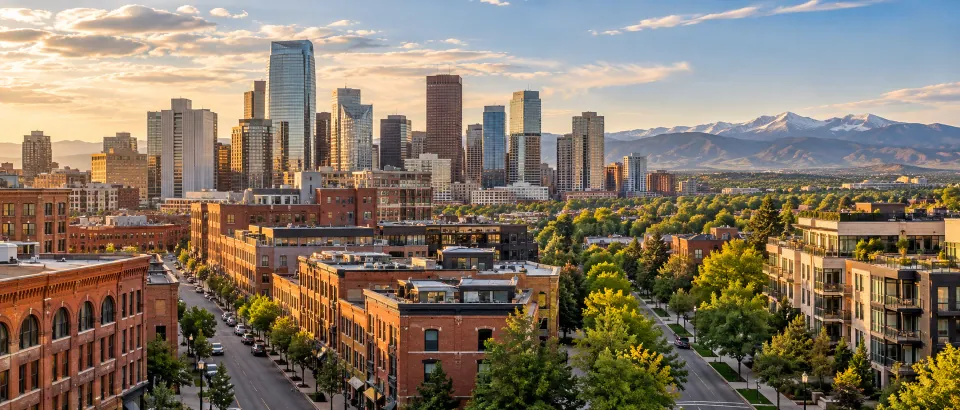














































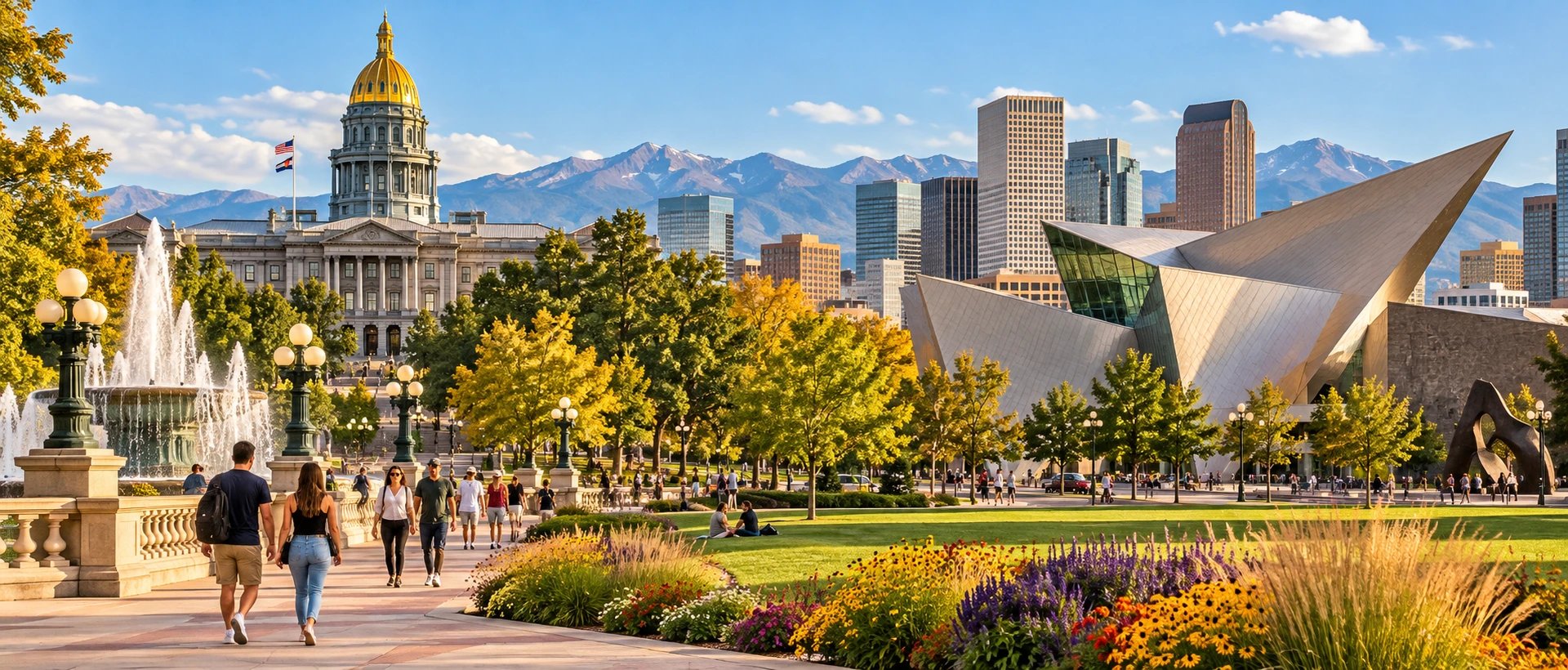
A Denver Civic Center itinerary can bring together Civic Center Park, the exterior of the Colorado State Capitol, and the Denver Art Museum in one half-day. These destinations sit in the cultural district south of downtown and work well as a series of short walks. The State Capitol is a state government building; City and County Building, on the park’s west side, houses Denver’s city and county government. Do not confuse the two as the same city hall. Decide whether architecture or the museum galleries are your priority, then make the other type of stop part of the route.
This guide suggests using the park area as the outdoor portion and the art museum as the main indoor stop, with roughly three to four hours for a self-planned half-day. That is an example including stops and breaks, not an official tour duration or a guaranteed walking time. A Capitol tour, close visits to several exhibitions, or another museum will mean dropping a stop or allowing more time. Before setting out, check the local date and time on the CityTimeDate Denver city page; follow each venue’s notices for reservations and admission.
Locate Civic Center and the cultural district
Mark the actual entrances to the State Capitol, Civic Center Park, City and County Building, and the art museum on a map. The park lies between the Capitol and City and County Building, while the museum is to the south. These fixed landmarks give you clearer bearings than searching only for “Civic Center,” which could send navigation to an office building or an entrance different from the visitor entrance.
Golden Triangle, south of the park, is a common neighborhood name for planning a cultural walk. First-time visitors can keep this outing between the park and art museum instead of continually extending it to cover the whole district. For more neighborhood context, see Denver’s official tourism organization’s Capitol Hill and Golden Triangle guide and choose places that match your interests.
Plan walking routes from entrance to entrance, not by the straight-line distance between buildings. Park events, road work, and temporary fencing can change access. Check the sidewalks and legal crossings before deciding whether to walk through the park. If you need an accessible route, separately verify ramps, ground-level entrances, and elevator details; a staircase photo spot is not an entrance suitable for everyone.
Walk from the Capitol exterior around the park
Starting at the State Capitol, look at the gold dome and exterior, then follow open sidewalks toward Civic Center Park. The point of this outdoor segment is to understand how the public buildings and park relate spatially; you do not need to photograph every angle. From a spot with a broad view, look toward City and County Building on the other side of the park to connect the eastern and western landmarks.
An indoor visit to the State Capitol is a separate plan from an exterior walk. The usual opening and tour schedule currently listed by the state is primarily on weekdays; the building is closed on weekends and most federal holidays. Check visit dates, tour capacity, security, and entrances before traveling through the Colorado State Capitol visitor information. The dome is not open for independent access, and the climb has stair restrictions. If adding a tour, arrange the other stops around its time slot.
Treat the park area as a flexible stroll. View public art, gardens, or building perspectives where stopping is allowed, then continue toward the art museum. Events, maintenance, or construction may close parts of the park. Check the Civic Center Conservancy visit page and signs on site; if you meet a fence, reroute along open streets rather than assuming every park path is passable that day.
Make the art museum the half-day’s main stop
The Denver Art Museum works well as the main indoor stop on this cultural walk. Pick the exhibitions or collection areas you most want to see, then decide whether to add floors based on your remaining time. This is usually more comfortable than trying to walk through every gallery after arrival. If you only want to see the architecture, make it a brief stop, but remember that an exterior visit does not include the galleries.
The museum campus includes buildings such as the Hamilton Building and Martin Building. The museum’s architecture guide can help you identify the buildings and entrances. The two main buildings look very different. Plan “seeing the architecture” and “seeing the exhibitions” as separate activities: the former can be a short outdoor stop, while the latter requires entry, finding galleries, and time to walk around. Do not estimate both with the same number of minutes.
Check ticket types, the day’s hours, special exhibitions, entrances, and accessibility services in the Denver Art Museum visit guide. This article does not list fixed prices or assume every exhibition is included in one ticket; verify the contents when booking. Allow roughly 1.5 to 2 hours for the main exhibitions as a planning suggestion. If you like to read every label or spend time with individual works, shorten the outdoor portion or reserve more time inside.
Plan a forward or reverse route by time
First-time visitors can follow this order: Capitol exterior, Civic Center Park area, then the art museum. One half-day example allows about 45 to 60 minutes total for outdoor architecture and the park, 1.5 to 2 hours for the main exhibitions, and another 30 to 60 minutes for walking, admission, and breaks. These are self-estimates; adjust for actual entrances, queues, and your group’s pace. If you have booked a tour or timed exhibition entry, use that reservation as the itinerary’s anchor.
If the weather is uncertain or the exhibitions are your main reason for visiting, you can start at the museum and walk around the park and Capitol exterior afterward. Check the museum’s opening and entry rules first so you do not arrive too early and wait outside. After leaving, decide whether to continue based on weather and daylight. The choice between forward and reverse order is about placing your priority at the time you can rely on most; neither direction is mandatory.
With children, older adults, or anyone uncomfortable with continuous walking, remove an outdoor detour and keep clear meeting and rest points. If you have another neighborhood planned afterward, decide in advance which exit you will use and where pickup or transit boarding will happen. Do not pack the park stroll, museum visit, lunch, and transfer into a schedule without buffer time. One fewer stop can make the main visit more complete.
Choose other cultural stops by interest
If you are especially interested in abstract painting, consider the nearby Clyfford Still Museum. For local history, consider History Colorado Center. Both require separate planning for opening hours and admission; do not assume that being in the same cultural district means you can visit both for free as quick walk-ins. Check the Clyfford Still Museum visit information or the History Colorado Center official site, then decide whether to substitute one for your original main stop.
With limited half-day time, choose one focus between art and history. If you want to explore the art museum in depth, you can note the other venues from outside and save them for another visit. If Colorado history matters more, shorten the art museum visit or switch to the Capitol exterior and history museum. These are interest-based choices, not a checklist every traveler must complete.
The nearby central library is another option for seeing a civic space, but do not assume it is an all-hours lounge. Check service hours and visitor rules if you plan to enter. If you have only a short gap, use the time to drink water, sit down, and confirm your return trip. For venues that require tickets, compare what you want to see and keep the stop that best fits; discovering at the door that you have too little time is avoidable.
Further reading and sources
Event dates, opening hours, and transport services may change. Check official updates before you travel.