














































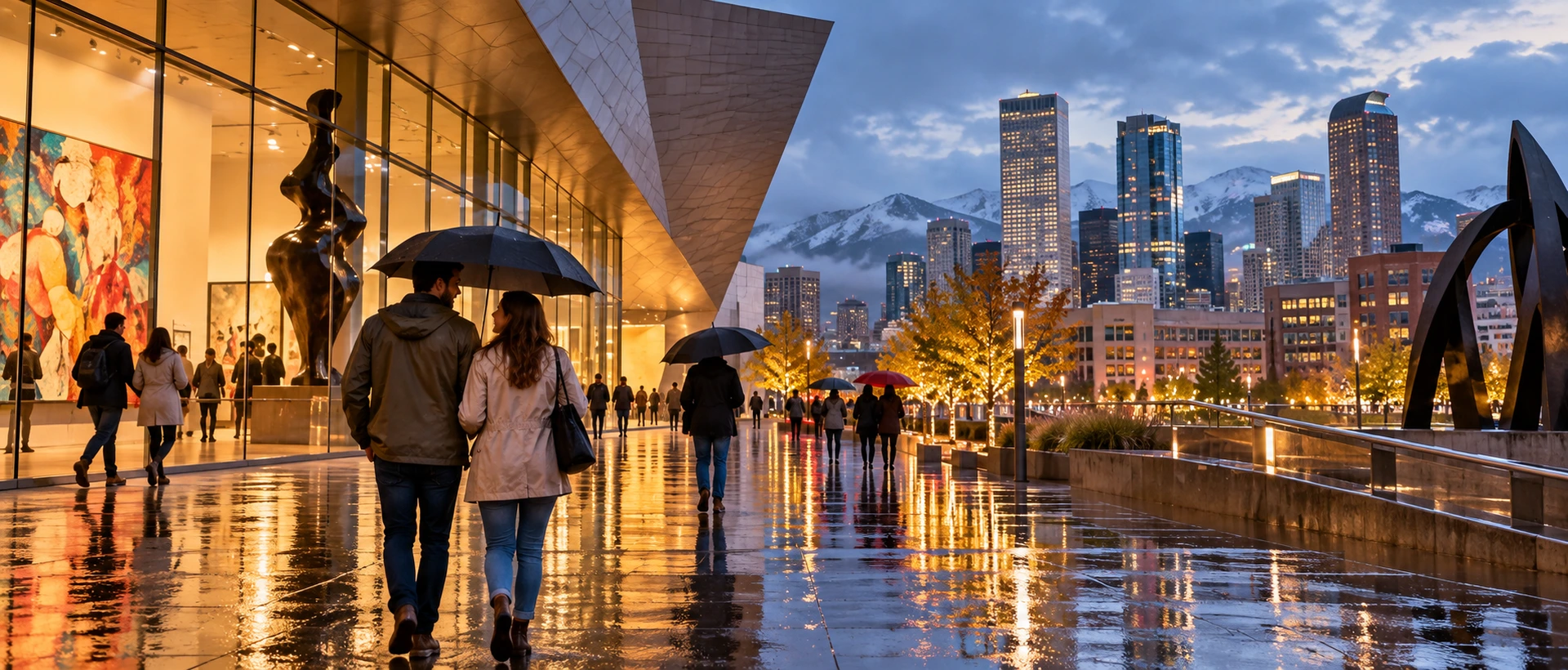
In Denver, a planned walk through a park, along the river, or around a neighborhood may need to change because of thunderstorms, falling temperatures, rain, or snow. When preparing indoor options in Denver, first choose a venue near your lodging or current itinerary that is confirmed open that day, then check how to reach its entrance. If a thunderstorm is nearby, go to an appropriate place for lightning safety and wait there; move on only when conditions allow. Do not keep walking a long distance outdoors just to reach a museum you prefer.
A useful backup plan does not replace every fair-weather stop with an indoor attraction. It reduces transfers and keeps one main activity plus enough time to rest. This article explains how to choose among downtown arts and culture, natural science, and short activities near your lodging. It does not present any venue as a guaranteed walk-in shelter. Before leaving, check the local date and time on CityTimeDate’s Denver page, then review weather alerts, venue notices, and transit service. Consider appointment times alongside actual travel conditions.
Assess the weather and travel conditions first
First determine whether the weather is only a brief shower or whether lightning, strong winds, snow accumulation, or ice are concerns. Light-looking rain does not necessarily make it suitable to remain in a park or by the river; assess cold temperatures together with wind, surface conditions, and the needs of everyone in your group. Check local forecasts and alerts at the [National Weather Service Denver/Boulder office], and make sure the forecast area matches the neighborhood you plan to visit.
Do not use downtown weather as a substitute for conditions in nearby mountains. If you planned a trail or mountain activity and the forecast is unsuitable, cancel that portion first and consider an indoor plan in the city. Denver’s backup venues may be far from outdoor destinations, so compare travel time and transit conditions before crossing town just because a place is indoors.
Mark your current location, the nearest building you can enter, your main backup venue, and your lodging on a phone map. Check whether any leg still requires a long walk or an extended wait outside. If transit or venue information is unclear, stay somewhere you have confirmed you can remain while you check the details. You can decide on the itinerary later; a ticket you already bought is not a reason to disregard current travel conditions.
Wait out a thunderstorm before changing routes
When you hear thunder, go immediately into a substantial building with electricity or plumbing, or into an enclosed, hard-topped metal vehicle with its windows closed. An umbrella, a spot under a tree, an open gazebo, or a park shelter is not suitable lightning protection; do not wait until heavy rain starts before leaving an exposed area. The National Weather Service’s lightning safety guidance also advises staying in a safe place for at least 30 minutes after the last thunder.
Once indoors, confirm that you are allowed to stay there, check whether closing time is approaching, and make sure everyone in your group has arrived. Keep away from windows and doorways, avoid direct contact with plumbing or electrical equipment, and follow staff instructions. Use this time to check venue tickets, contact your transportation provider, or adjust upcoming reservations. Do not immediately resume the original outdoor schedule just because the rain eases.
If the storm is still nearby, remain at your current safe location and wait until conditions allow you to travel to the next stop. Museums, restaurants, and shops may require a ticket, purchase, or arrival during business hours; do not assume every entrance is available at any time. If you can no longer make an existing reservation, check the change and cancellation rules. Delaying one part of the itinerary is usually more sensible than rushing to another entrance through a thunderstorm.
Switch to an arts and history itinerary downtown
If you are around Civic Center or Golden Triangle, Denver Art Museum can be your main backup option. Choose the exhibitions and collections you want to see, then check the entry time, ticket type, and entrance for that day before heading over. A museum visit allows for a longer indoor stay, but there may still be outdoor stretches between buildings or from parking to the entrance, so include those short transfers in your plan.
Use the Denver Art Museum visitor guide to check hours and ticket information. This article makes no fixed promise about prices, free days, or which special exhibitions are included. If you are visiting at short notice, confirm in particular that you can still enter the exhibition you want to see. If you have only an hour or two, focus on a few galleries rather than rushing through the museum to “see it all.”
If you would rather focus on local history than art, consider History Colorado Center and first check available dates on its official ticketing page. There is no need to schedule both venues during the same rainy half-day. Choose one as your main stop based on your interests, then leave time for a meal and the return trip. If you are near LoDo or Union Station, compare the travel conditions to the cultural district; a nearby indoor place where you can legally remain may be better for a short wait.
Choose an indoor main stop for families and science fans
Travelers interested in nature and science can consider the Denver Museum of Nature & Science. Check the museum’s official visit page for exhibitions, available facilities, and same-day entry information, then choose what to see based on children’s ages or the group’s interests. It is a separate venue from the downtown art museum, and it should not be treated as a quick transfer that takes only a few minutes.
If you want to add a planetarium or theater program, check the showtime and whether it requires a separate ticket. That can prevent surprises after you have purchased general admission. Popular programs, temporary maintenance, and gallery changes may affect a visit, so the experience is not guaranteed to be identical every time. With children, choose one main activity and plan for restrooms, water, and short breaks so the pace fits how they feel that day.
Factor in the trip there as well. If you are coming from downtown, check public transit, pickup and drop-off areas, or parking, and estimate the outdoor distance to the entrance. In bad weather, you do not have to cross town just to have more exhibitions to choose from. If a child is tired, clothes are wet, or the return trip is difficult, going back to your lodging to regroup is a complete itinerary adjustment; there is no need to add another paid attraction.
Reduce transfers and waiting outdoors in cold or snow
When temperatures drop or snow is falling, the goal is to reduce time exposed to the weather and time waiting outside—not simply to replace an outdoor destination with an indoor one. Try to choose one venue where you can stay longer, and plan lunch or a rest at a nearby place whose hours you have confirmed. Dress and choose footwear for the day’s forecast. If surfaces are slippery or snow-covered, walk less and avoid extending an outdoor stretch just to save one transfer.
For winter conditions, consult the National Weather Service Denver/Boulder winter weather page, noting the forecast period and its uncertainty. Do not assume every street will have the same conditions based on one snowfall figure, and do not treat what you see outside now as a substitute for the later forecast. If you have an evening activity, the trip back may be different from the afternoon journey, so check again before leaving the venue.
For public transit, check RTD service alerts and the schedule for your route. If service, stops, or shuttles change, make sure an alternative can actually get you to the entrance of your lodging. Rideshares or pickups may also take longer; confirm the vehicle and pickup location indoors where you are allowed to wait, then move when conditions on site allow. No mode of transportation is guaranteed to be unaffected by weather, so do not rely on the last service of the day or a tightly timed reservation as your only way back.
Further reading and sources
Event dates, opening hours, and transport services may change. Check official updates before you travel.