














































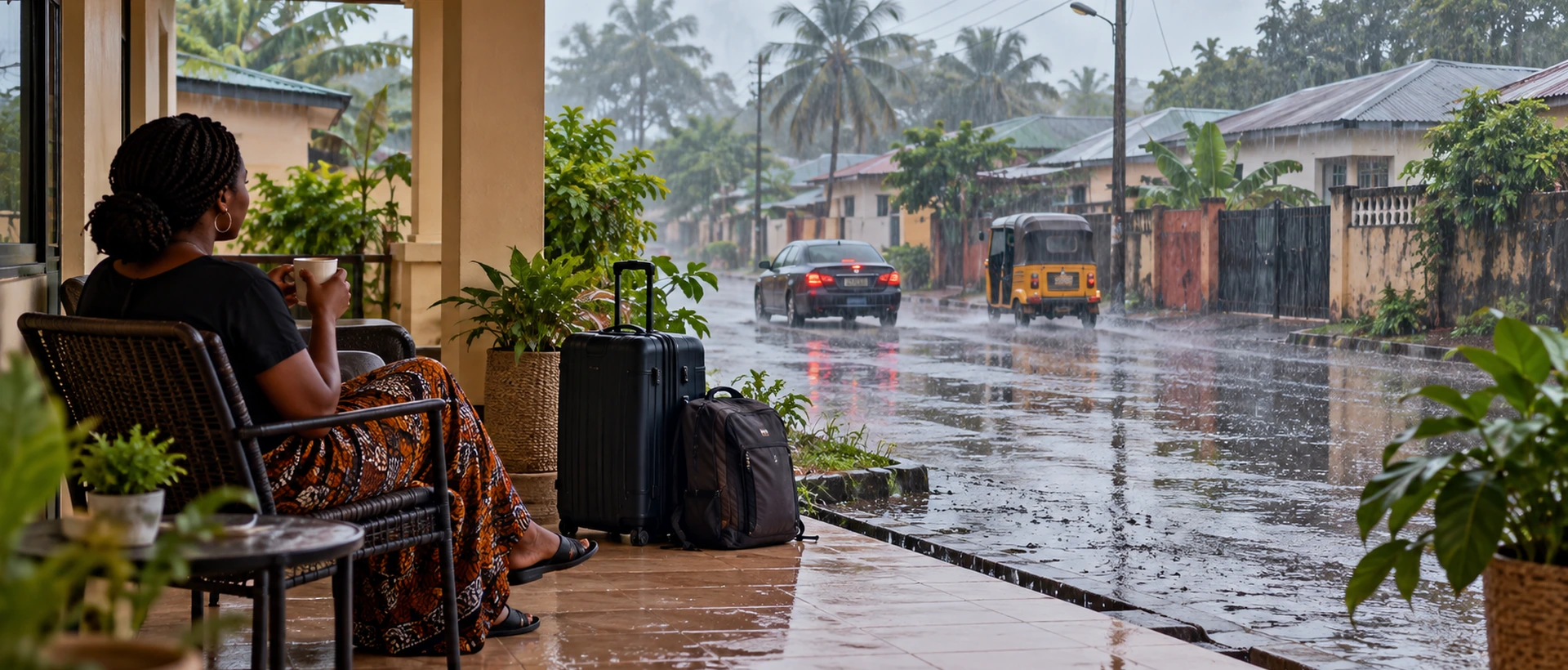
In heavy rain in Warri, the practical approach is to shorten steps that must happen outdoors and arrange in advance alternative places where you can wait, reschedule, or be picked up directly. Rain affects visibility, roads, luggage, and vehicle stopping, so even a ten-minute walk may become unsuitable. This article brings weather, indoor waiting, pickups, and contact messages into one rainy-day itinerary.
Check daylight and weather separately
Check a reliable weather service for rainfall trends, then use the city time page to confirm Warri’s local date and time. A forecast gives probabilities and trends; it cannot guarantee that a street is free of standing water or that a pickup point is usable. Treat departure, meeting, and return as separate periods, each with a point at which you can cancel or postpone.
Check daylight separately from weather. Even after rain stops, darkness, wet-road reflections, and visibility can affect the final walk. If the trip must be completed in daylight, schedule the outdoor section with extra flexibility and mark the indoor waiting place on the map instead of writing only “nearby.”
Replace outdoor errands with an indoor meeting
Group matters that cannot wait separately from matters that can be handled by phone or online. Document checks, a short briefing, or pre-payment verification may be done indoors; for a site visit or physical handover, check rain and road conditions before leaving. Tell the other person whether the place, time, or method is changing, rather than sending only “It is raining; I will be late.”
An alternative point needs a clear entrance, seating, and a contact person. For a café, accommodation common area, or office lobby, confirm that waiting and charging are allowed; do not assume an unfamiliar place is open. If you need a quiet call, save the alternative address separately from the original destination.
Pickup and a sheltered waiting point
For a rainy pickup, reduce the passenger’s walk on exposed roads and provide a safe place to board or leave the vehicle. Move the meeting point from a narrow alley to a roofed entrance where a vehicle can stop briefly without blocking traffic, and tell the driver which side the passenger will approach from. If drop-off must be farther away, state the walking distance and road conditions first.
Put Warri local time, the plate number or driver’s phone, the backup meeting point, and the latest waiting time in one message. If the rain worsens, give explicit “delay, change the point, or cancel” options. For older people or large luggage, send one person to confirm the sheltered place before asking everyone else to move.
Luggage and item collection
Rain calls for extra protection for luggage, paper documents, and electronics. Keep waterproof bags, spare clothing, a towel, and charging equipment in an easy-to-reach outer layer, and leave a buffer around collection time. If an item must stay dry, ask in advance whether handover can happen indoors instead of searching for shelter after the vehicle arrives.
After shopping or collection, reassess weight and volume. Pulling luggage, carrying a box, or holding an umbrella in rain reduces visibility and hand control; if a vehicle can collect items at the entrance, use that option. Photograph the signed receipt for a document handover and record the Warri date and time for follow-up.
Update contacts and arrival plans
Rainy itineraries fail when the information is on only one person’s phone. Share the new departure time, alternative location, pickup phone, and cancellation conditions with everyone concerned. If you expect to be late, give your current location, the next check-in time, and acceptable alternatives so the other side can decide.
Use the CityTimeDate Warri city page and timer to set check-in points; compare the dates before and after a change with the date-difference tool. These tools organize time, but the decision to leave still depends on rain, roads, and companions’ condition on site.
Set a clear decision deadline, such as checking rain and roads again one hour before departure. Then choose the original plan, a delay, or an indoor alternative, immediately tell everyone, and remove old meeting messages so people do not follow different versions.
If the weather keeps changing, split the itinerary into short segments that can be cancelled independently and decide on the next segment only after the previous one is complete. Keep rain gear, a dry bag, spare shoes and socks, and charging equipment close at hand. Preparation reduces waiting and rescheduling stress, but it cannot replace an on-site assessment of standing water and traffic safety.
Before leaving, check once more that the address, city, date, meeting method, phone number, and backup plan are independently understandable to companions. Save the latest reply offline and update the record after arrival according to conditions; do not let an old message control the next step.
Before leaving, check once more that the address, city, date, meeting method, phone number, and backup plan are independently understandable to companions. Save the latest reply offline and update the record after arrival according to conditions; do not let an old message control the next step.
Further reading and sources
Event dates, opening hours, and transport services may change. Check official updates before you travel.