














































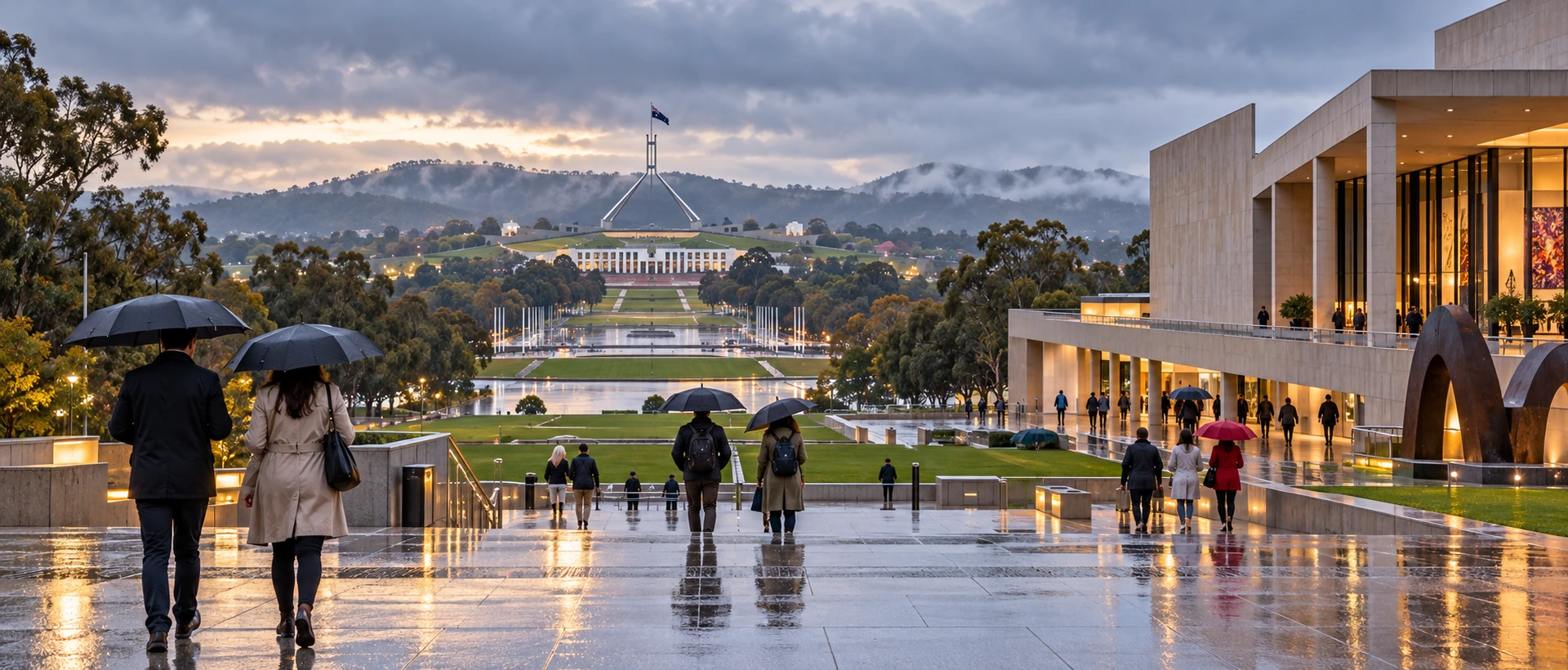
When it rains in Canberra, you may need to reorder visits between national institutions, the city centre and the lakeshore. The institutions may look close together, but entrances, parking, walking and waiting distances vary. If every outdoor transfer is scheduled around midday, even a brief shower can disrupt the day. Separate indoor visits, transport and outdoor sections that can be shortened, then adjust them to the day’s forecast. This is usually more reliable than dropping a stop at the last minute.
Before leaving, open the CityTimeDate Canberra page to check the city’s location and local time, then review institution notices and the Bureau of Meteorology forecast. This article does not guarantee that any venue will open on a rainy day or provide a fixed sheltered route. It offers a planning method for different rainfall and group needs.
Separate indoor and outdoor sections
Start by listing the indoor institutions you need to visit, then treat the lakeshore, lawns and longer walks as adjustable sections. Indoor visits depend on opening hours, entrances and bookings; outdoor sections depend on rain, wind, surfaces and the distance your group can manage. Keep the two types of information separate so the itinerary is quick to change before you leave.
Divide each day into morning, midday and evening. Schedule the most important indoor destination first, then decide whether the walk between stops makes sense. If rain is expected to increase in the afternoon, visit a farther institution earlier or place a brief outdoor transfer during a lighter period. Daylight information can help you understand the sky, but it does not replace a forecast.
If group members have different interests, choose an indoor meeting point and a transport meeting point. Someone who finishes early can wait without everyone searching in the rain. Pick a clear institution entrance, public road or transport stop, rather than an indistinct corner.
Shorten rainy walks between institutions
Check each institution’s actual entrance before choosing which two stops to visit in succession. A straight-line distance on a map does not mean there is a sheltered pedestrian route; roads, plazas or construction may require a detour. In heavy rain, it is better to visit one fewer place than to base the whole day on crossing open spaces quickly.
For a vehicle pickup, confirm the stopping place, drop-off direction and distance to the entrance. On public transport, check the final stretch from the stop to the institution. Stops with the same name may not have equally convenient exits. Save a station-area map and the institution’s address before leaving to spend less time finding the way in the rain.
If you need to walk, keep rain gear, suitable shoes, a change of clothes and a waterproof bag easy to reach. With children or older adults, alternate short walks with indoor breaks instead of walking continuously between several institutions. Do not estimate exposure only by the number of minutes: opening an umbrella, crossing streets and organizing bags also take space and time.
Plan for entrances, rain gear and luggage
Check visitor rules, bag storage and security procedures before setting out. Large umbrellas, luggage or wet coats may need special handling; sorting them out at the entrance can add waiting time. Keep rain gear near the top of your bag and carry a waterproof bag for wet items to make the next indoor visit more comfortable.
Recalculate the route from your accommodation to the first stop for rainy conditions. A short walk may be less convenient than a ride, especially if it crosses a major intersection or an exposed road. For an airport or accommodation transfer, compare the distance from the drop-off point to the entrance, not only the driving time.
After arriving, locate indoor seating, restrooms and exits. Leave time to put away rain gear and refill water; do not schedule every opening period back-to-back. These buffers give you options if the rain briefly intensifies.
Two back-up plans for changing rain
The first back-up is to shorten the route within the same area: keep one main institution and replace or remove a longer outdoor section nearby. The second is to switch to an indoor activity in the city centre or return to your accommodation early. Write down both options before leaving so you can switch as the rain changes.
When checking the forecast, look beyond the all-day rain icon to the timing, wind and alerts. Recheck the Bureau of Meteorology’s Canberra forecast before departure. Even when rain eases, standing water, poor visibility or slippery surfaces can make a planned walk unsuitable.
If a venue requires a booking, confirm that your back-up can admit you. Do not treat unverified opening hours or an online article as a rainy-day guarantee. The most useful alternative is an indoor place that is easy to reach, has somewhere to rest and offers a clear way back.
Connect the route with transport and your accommodation
For the return trip, check from the institution where you actually finish rather than simply reversing the morning route. Confirm stop direction, waiting location, pickup point and accommodation entrance, and leave time to depart early. If the group has wet coats or bulky belongings, the final walk may need more adjustment than the outbound trip.
Use the latest Transport Canberra notices for public transport and service status. Organize travel dates with the CityTimeDate date and time tool, then update the plan using the forecast and institution notices. Do not apply another Australian city’s transit-card rules or rely only on a route checked yesterday.
Keep your accommodation address, meeting address, back-up indoor location and essential phone numbers together in offline information. If the network or battery fails, everyone can still see where to go next. A rainy-day plan should preserve options to turn back, rather than maximize the number of attractions.
Further reading and sources
Event dates, opening hours, and transport services may change. Check official updates before you travel.