














































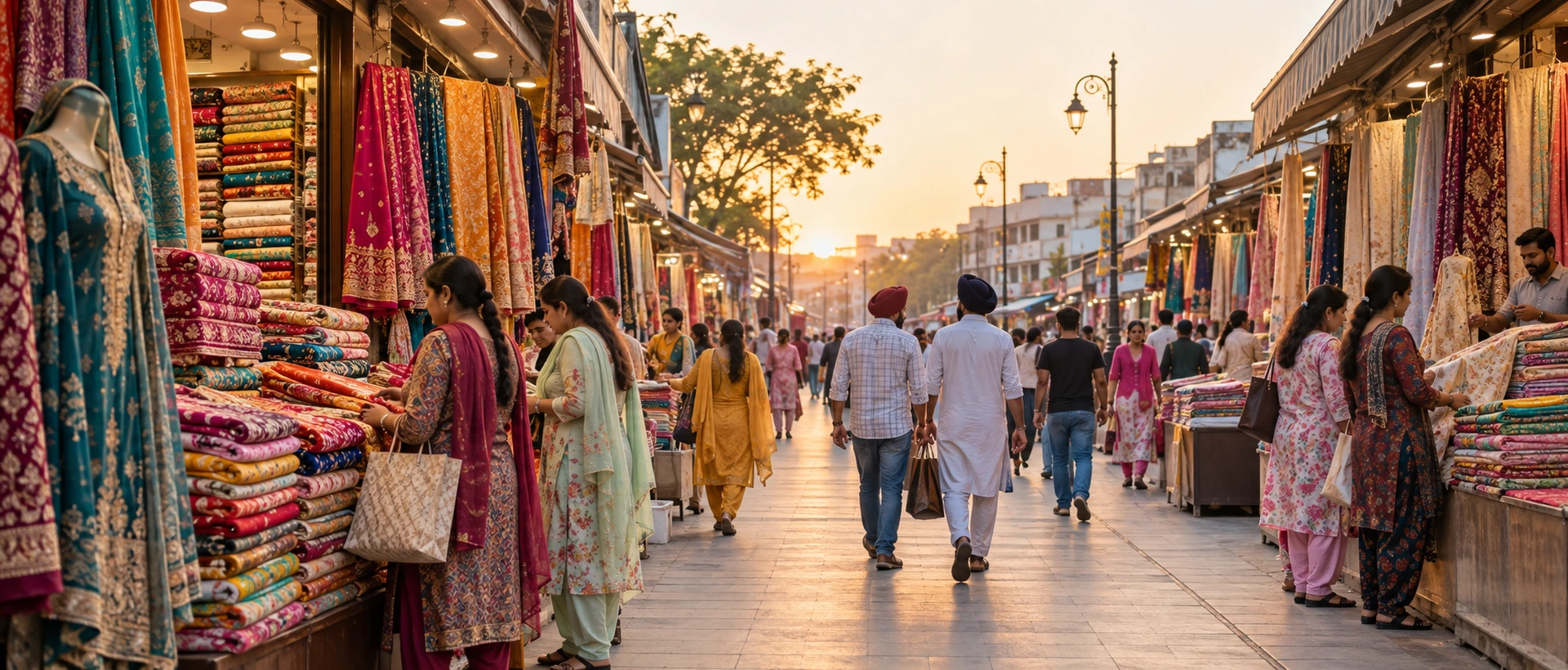
This article does not list fixed shops, prices, or guaranteed opening hours. It offers methods for organizing addresses, navigating short trips, choosing meeting points, and carrying samples. First check the local time on the CityTimeDate Ludhiana city page, then adjust your plan based on shops, your accommodation, and conditions on the day.
Confirm shopping goals and neighborhood boundaries
Write down the types of fabric you want, their intended use, quantities, and acceptable alternatives. Record shop names, full addresses, and nearby intersections separately. Do not save only the search-result title, since similar names may appear on different streets.
If you plan to visit several shops, group them by area and order the stops from nearby to farther away. Keep one clear main meeting point and one backup point for each group, so everyone can regroup even when mobile reception is unreliable.
How can you organize shop addresses to avoid getting lost?
Keep the English or local-language spelling, map link, and recognizable landmark for each address. Put your accommodation, fabric shops, and return directions in the same offline note so you do not mistake a shop name for a neighborhood name.
If a shop gives only a vague market name, ask the shop or your accommodation to confirm the entrance, floor, nearby intersection, and a place where a vehicle can stop. Do not treat a sign in an old photo as the only proof of the current address.
How should you plan walking routes and short transfers?
When planning a walking route, consider sidewalk width, crossings, steps, shade, and places to pause. A short distance may still be unsuitable when carrying samples or pushing a cart; arrange a short vehicle transfer between blocks when needed.
Navigation estimates can change with crowds, construction, weather, and temporary road closures. Before setting out, decide which main intersection you will return to if an alley is blocked, and tell your companions about that backup.
How can you choose a clear and safe meeting point?
Choose a meeting point that is easy to recognize, does not obstruct passage, and gives companions room to wait. Describe it using a shopfront, intersection, public facility, or prominent street number rather than simply saying “the market entrance” or “nearby.”
If companions shop separately, agree on check-in times and contact methods, and make sure everyone saves both the primary and backup meeting points. After shopping, count the samples together at the meeting point before leaving so goods are not left at different shops.
How should you handle fabric, samples, and luggage in stages?
Estimate the weight and volume of fabric rolls, sample bags, and luggage separately. Ask whether shops can package or temporarily hold items, and confirm that the pickup vehicle can carry them safely; do not assume temporary storage will be available.
If you are continuing to your accommodation, the station, or a factory, break the route from the shopping area to the next destination into separate legs. Leave time for payment, packaging, finding a vehicle, and a short rest. Do not fill the return schedule based on ideal conditions.
Further reading and sources
Event dates, opening hours, and transport services may change. Check official updates before you travel.