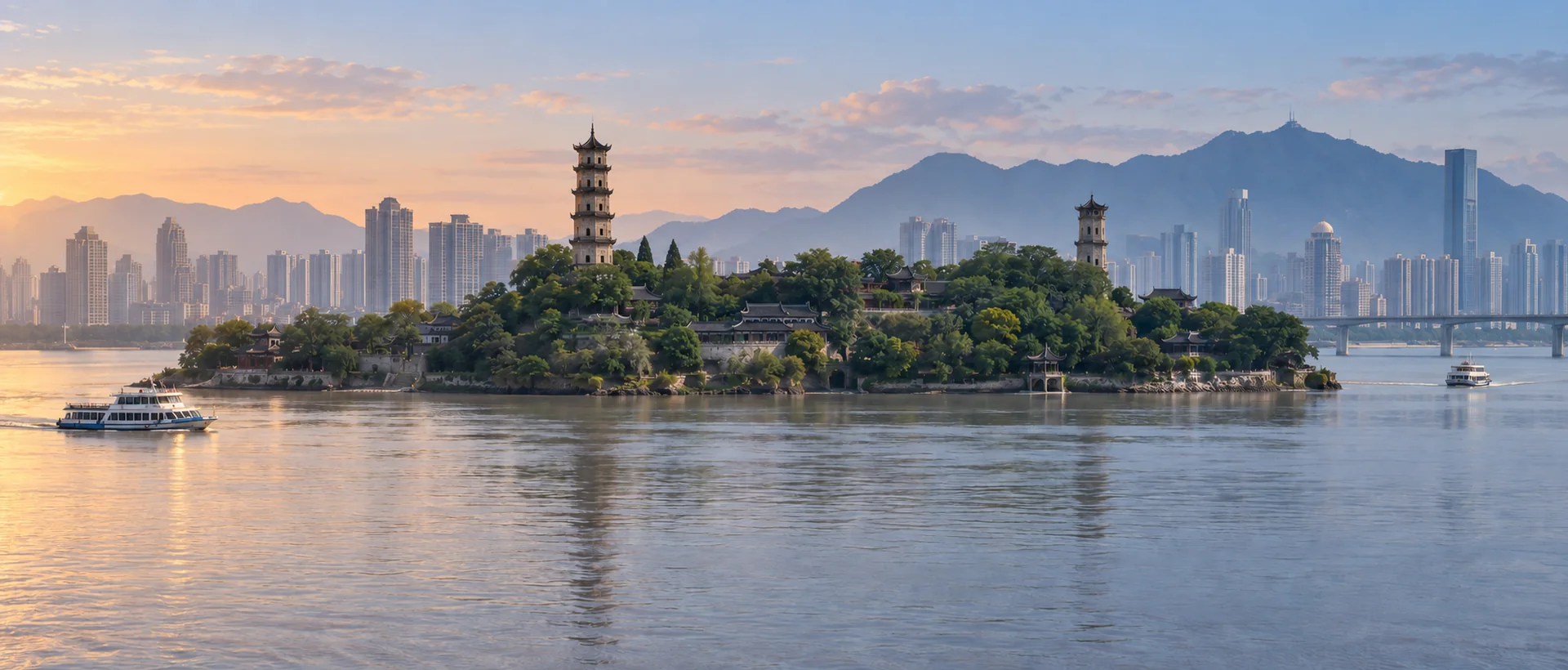














































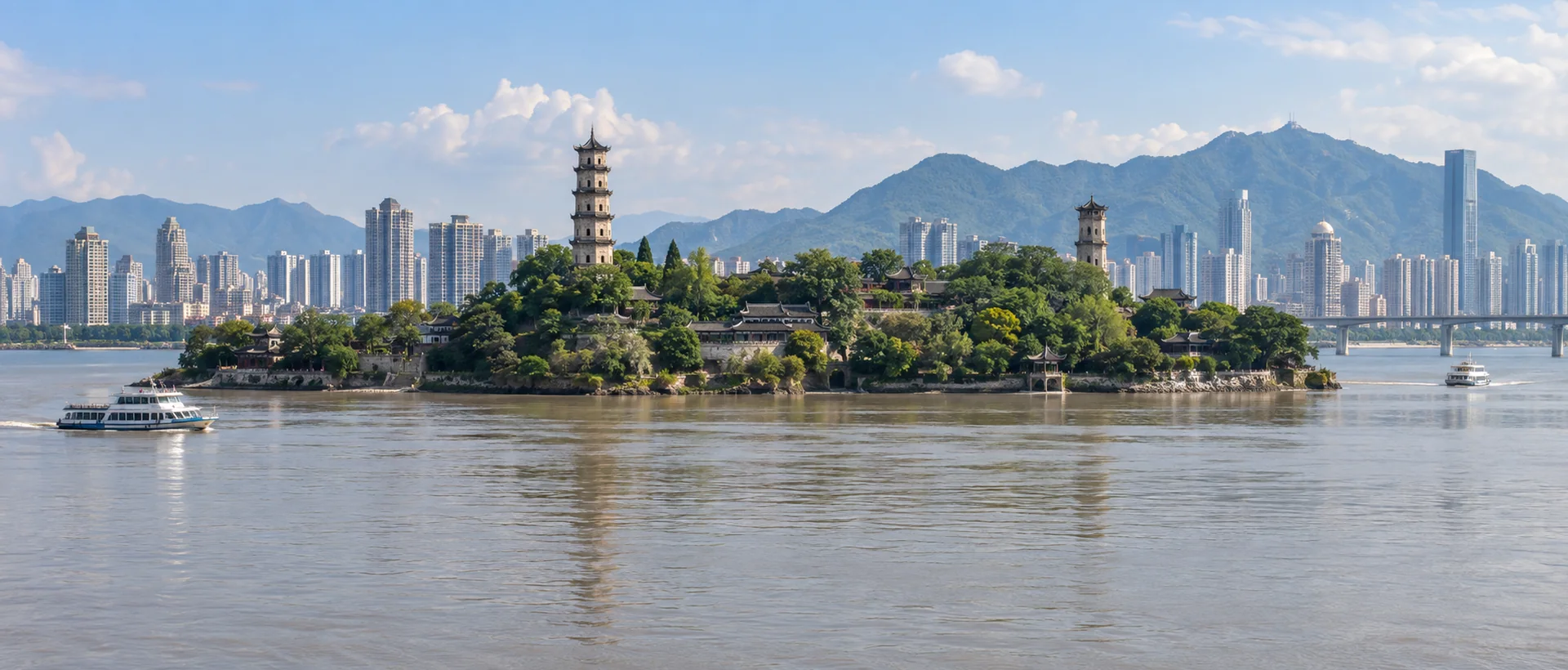
For an evening walk along the Oujiang River in Wenzhou, treat sunset time as one planning reference, not the whole schedule. The experience also depends on that day’s clouds or rain, which stretch of riverbank you choose, buildings or hills blocking the view, and how you’ll get back to your accommodation after leaving the viewpoint. Online photos of glowing skies, lights, or boat services are not a daily program. Start with a public riverbank that is easy to enter and leave, check light conditions for your travel date, then confirm meals, meeting arrangements, and the return trip separately so you can adjust as daylight changes.
Check the date and sunset information
Before setting out, open the CityTimeDate Wenzhou city page, confirm the city and selected date, then review the sunrise, sunset, or daylight information shown. Record Wenzhou plans in local time, UTC+8; the time-zone identifier can be written as Asia/Shanghai. Do not copy the departure-date display from an overseas device directly into your itinerary. If the page only shows today’s information, do not assume the same clock time applies to another travel date. When using another tool, check its date, location, and time zone as well.
Sunset time is not the same as complete darkness, and it does not guarantee enough light for walking at the site. Sunset and twilight are different; natural light may remain after sunset, but clouds, fog, obstructions, and local lighting affect how well you can see the path. Day length is not a forecast of sunshine or rain. If the displayed light information differs from what you see on site, use actual visibility and staff guidance to decide whether to shorten the route. Do not keep going just to reach the listed time.
Riverbank direction and the actual view
Different points along the Oujiang River do not offer identical views. Use a map to identify which bank you are on, the path entrance, and your exit direction; then check in daylight whether trees, bridges, buildings, or hills block the view. The direction of sunset changes with the season, so facing the river does not guarantee a direct view of the setting sun. If you want a particular foreground for a photo, choose a spot based on that day’s sun direction and the actual sightline. A photo from another season or riverbank does not guarantee the same view from your location.
Treat a riverside walk and a visit to Jiangxin Islet as separate itinerary options. If you need a boat, a ticket, or entry to a managed area, check that day’s opening status, ticketing, return trips, and temporary notices separately. A city page showing daylight does not mean the service is operating. If you only want a brief river view, first consider a public space confirmed to be open where you can return the way you came. Do not add a cross-river trip or boat ride at the last minute just for a different photo angle.
Work backward from arrival and departure
First decide the latest time you want to leave the riverbank, then work backward to set your arrival time. Estimate separately the trip from your accommodation, finding the entrance after getting out of a vehicle, walking to the viewpoint, taking a break, and returning to the pickup point. Driving time on a map does not include all walking, waiting, or wayfinding. Do not plan to arrive at sunset itself: you could end up rushing and miss the chance to identify the entrance and return route in daylight. Set your buffer based on the day’s traffic and your group’s walking pace; there is no fixed number of minutes that suits everyone.
In the meeting message, specify the date, Wenzhou local time, exact entrance, and a backup contact method. If people in your group are leaving from different accommodations, have each person confirm their route; “meet by the river” is not a precise meeting address. You can use the CityTimeDate timer to remind you to pack up or prepare to head back, but check device battery, notification permissions, and sleep settings. A web reminder is not guaranteed to sound, and it is not a live transit alert.
Weather, lighting, and group needs
Check local weather alerts and management notices both before leaving and after reaching the site. In a thunderstorm, strong wind, standing water, or if you encounter barriers or a closed path, switch to a route confirmed open or cancel the riverside plan. The absence of a sunset glow is not a reason to keep waiting. Footwear, path surfaces, and railings also affect where it is safe to walk. Stay on permitted paths, do not cross barriers, and do not approach closed waterside platforms for photos.
If older adults, children, or a stroller are in your group, check ramps, stairs, resting places, and exit points while there is still enough light. A continuous river line on a map does not mean the entire route has smooth pavement, step-free access, or lighting; verify an accessible route with the managing authority. Stop for photos where you will not obstruct others, and adjust the distance to the slowest walker. If anyone is already tired, shortening the route is more practical than forcing everyone to complete the original plan.
Return transport and backup plans
Before leaving, confirm the actual pickup location, which side of the road is suitable for waiting, and the day’s return-service information. Sunset time cannot tell you the last bus, boat schedule, or availability of a ride; similar stop names do not mean you can board in the same direction. For a booked pickup, send the driver the location and how to reach it, and keep a way to contact them if plans change. If crowds or traffic controls make the original pickup point unusable, move to a safe place where stopping is allowed and contact the driver. Do not search for the car while walking into traffic.
Save the accommodation address, entrance location, return route, and essential contact details for offline use, and note when you last confirmed them. An offline map can help you recognize the route you checked earlier when your phone has no connection, but it cannot show that a road is currently open or a vehicle is operating. Check for change notices once you reconnect. Each person in the group should also keep information they can understand, so the only return directions are not on one nearly discharged phone.
Treat a meal or indoor rest location as a flexible backup, and check its opening hours and reservation requirements for that day. A restaurant having windows does not guarantee a sunset view, and an indoor alternative should not be described as a guaranteed scenic seat. If the weather is unsuitable for staying by the river, prioritize getting to a place where you can arrive safely, sit down, rest, and return to your accommodation. Skipping the view does not mean the rest of the evening must follow the original timetable.
After returning to your accommodation, keep the photo date and approximate riverbank location if you share pictures or plan another walk. Brightness, filters, and camera direction can change how a photo looks; one image cannot establish the lighting on another day. Before going out again, check the selected date on the Wenzhou city page, and separately confirm weather, access, and return information. Do not treat one successful outing as a rule that will hold every time.
Before leaving, make one final check of the city, date, time zone, entrance, departure time, and backup plan, and make sure everyone knows where to regroup. On site, look at the path before the view; if you move to another viewpoint, reassess the remaining light and the distance back. Leaving at a suitable time and returning according to the updated plan matters more than chasing a sunset view that cannot be guaranteed.
Further reading and sources
Event dates, opening hours, and transport services may change. Check official updates before you travel.