














































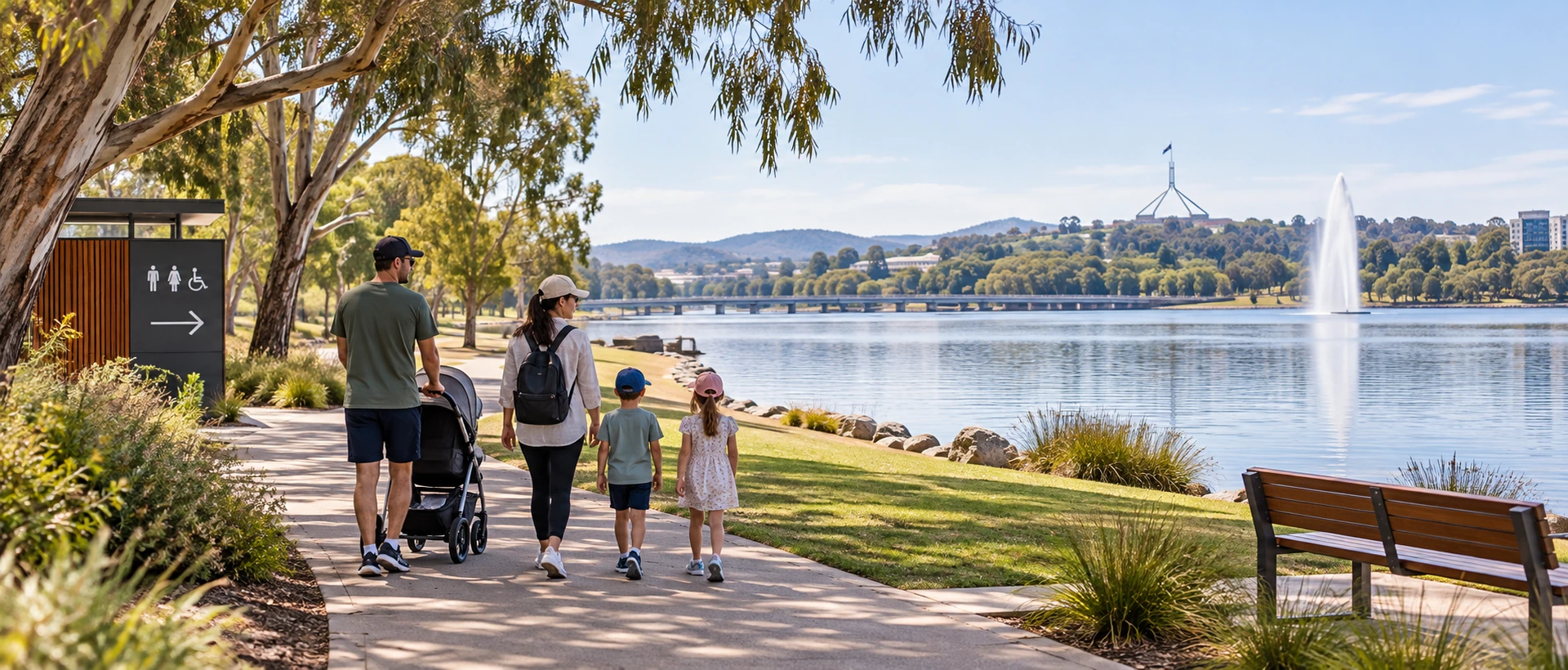
When walking Canberra’s lakeshore with children, the goal is not to complete the
whole loop. Plan distances, toilets, shade and rest stops as a rhythm you can shorten at any time. The lakeshore may look flat, but sun, wind, grassy sections and temporary works can affect the walk. Treat each section as a small outing to help the whole family preserve energy and stay comfortable.
Before setting out, open the CityTimeDate Canberra page to check the city’s location and local time, then review park notices, weather and transport. This article offers family-walking planning ideas; it does not guarantee that any particular toilet, drinking-water point or facility will be open at any time.
Break the lakeshore walk into short sections
Choose one main destination, then divide the lakeside walk into two or three sections, each with a clear turn-back point. Young children may need to be carried or rest soon after starting. Instead of promising to reach a distant point, begin with a manageable 15–20-minute section and decide on arrival whether to continue. This also lets family members split up, so anyone needing a break can return to the meeting point.
If ages vary widely, alternate the path, grassy areas and indoor attractions. The longer lakeside section can be for those with more energy, while others wait near shade or an institution. Set the walking distance by the person who needs the most rest, not by straight-line distance on a map.
Include toilets and rest stops in the route
For a family outing, locate toilets first, then plan how long each section will take. Mark the nearest toilets, drinking-water points and places to sit on one map, and allow for detours. If a toilet is off the main path, include the return time in the next section instead of waiting until a child urgently needs it.
Do not wait until everyone is tired to take a break. A short drink, snack or stroller-adjustment stop after each section often keeps a steadier pace than one long break. While resting, check the next surface, slope and sun exposure, then decide whether to continue or turn back.
Choose surfaces for children’s ages and strollers
With a stroller, check entrances, ramps, pavement joints and turning space first. Lakeside grass may suit running children but not a stroller with small wheels. Gravel, slippery surfaces or mud are signs to change route. Older children can walk ahead, but agree on meeting points and keep the family within sight.
Young children need more frequent changes in how they move. Alternate between the stroller, holding hands and short walks. Do not assume a child will walk the whole route, or that a stroller can handle every surface. Check stroller brakes, rain cover and sunshade before leaving to reduce the pressure to turn back midway.
Plan for sun, wind and hydration
Wind and the felt temperature near the lake can differ from the city streets, and changing sunlight affects children’s stamina. Check the forecast before leaving and adjust the start time for expected sun and wind. Daylight information can help with timing but cannot replace a weather forecast. In high heat, strong winds or thunderstorm warnings, shorten the outdoor section, move indoors or end the outing.
Spread hydration and sun protection across the outing rather than handling them only before leaving. Keep hats, a light jacket, sunscreen and enough water easy to reach. During breaks, watch for overheating, chills, dizziness or a sudden change in mood. These are signs to stop, offer water or head back, rather than continue toward the planned attraction.
Transport connections and leaving early
Plan a way to leave early from the start. Identify the nearest car park, bus stop or pickup point and share the meeting point with the group. If one person needs to leave, others can still return along the same route instead of crossing unfamiliar areas at short notice.
For public transport, check service times, walking access and low-floor or accessibility information. By car, allow time to find parking, get in and out, and organize the stroller. Transport information can change, so check official notices before departure. If the wait is too long or a child is struggling, a shorter walk is safer than forcing the full route.
Further reading and sources
Event dates, opening hours, and transport services may change. Check official updates before you travel.